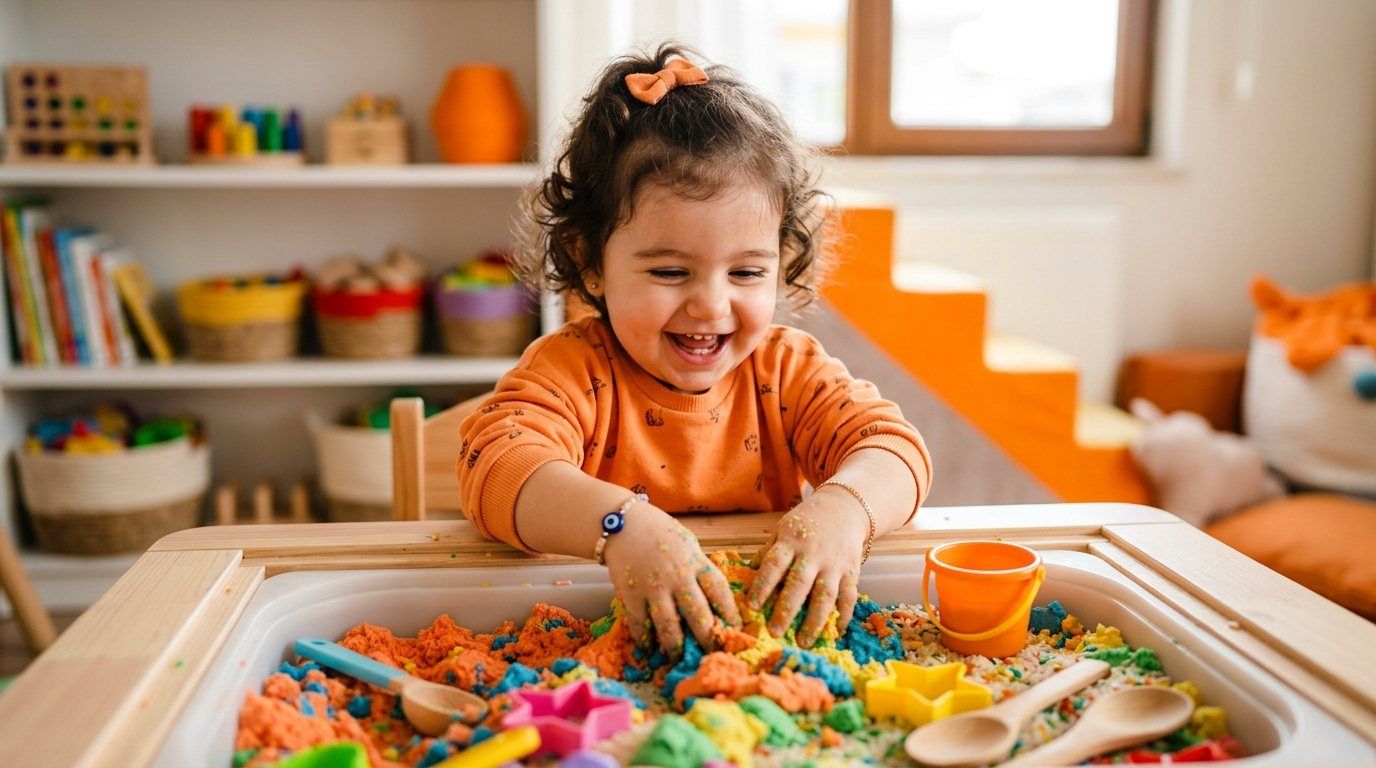
Sensory games are specialized activities that stimulate children's sight, hearing, touch, smell, and taste simultaneously, supporting neurological development. For children who explore the world through their senses from infancy, such games play a critical role in forming new neural pathways.
Sensory activities you can easily prepare at home include games involving water, sand, shaving foam, dry legumes, or modeling dough. For example, searching for small toys buried inside a large bin of dry beans stimulates both the child's tactile senses and their fine motor coordination.
Sensory play does not merely benefit physical development; it also helps children self-soothe and regulate their emotional states. Children experiencing focus challenges or hyperactivity often sustain attention much longer when engaged in sensory play. By offering your child the opportunity to experience diverse textures and materials, you enrich their perception of the world.